Project by Stan Slovetskiy For TECHIN 511A - Fabrication and Prototyping Lab
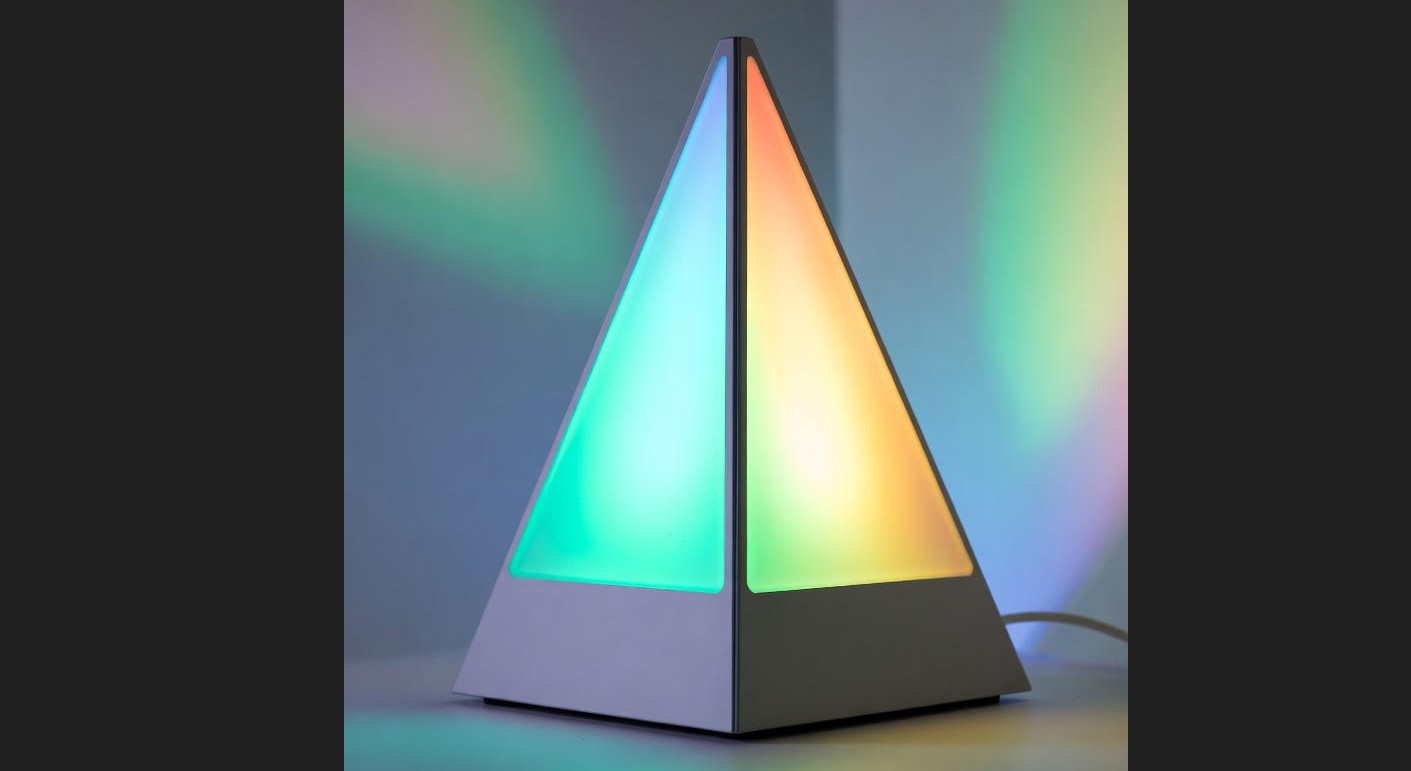
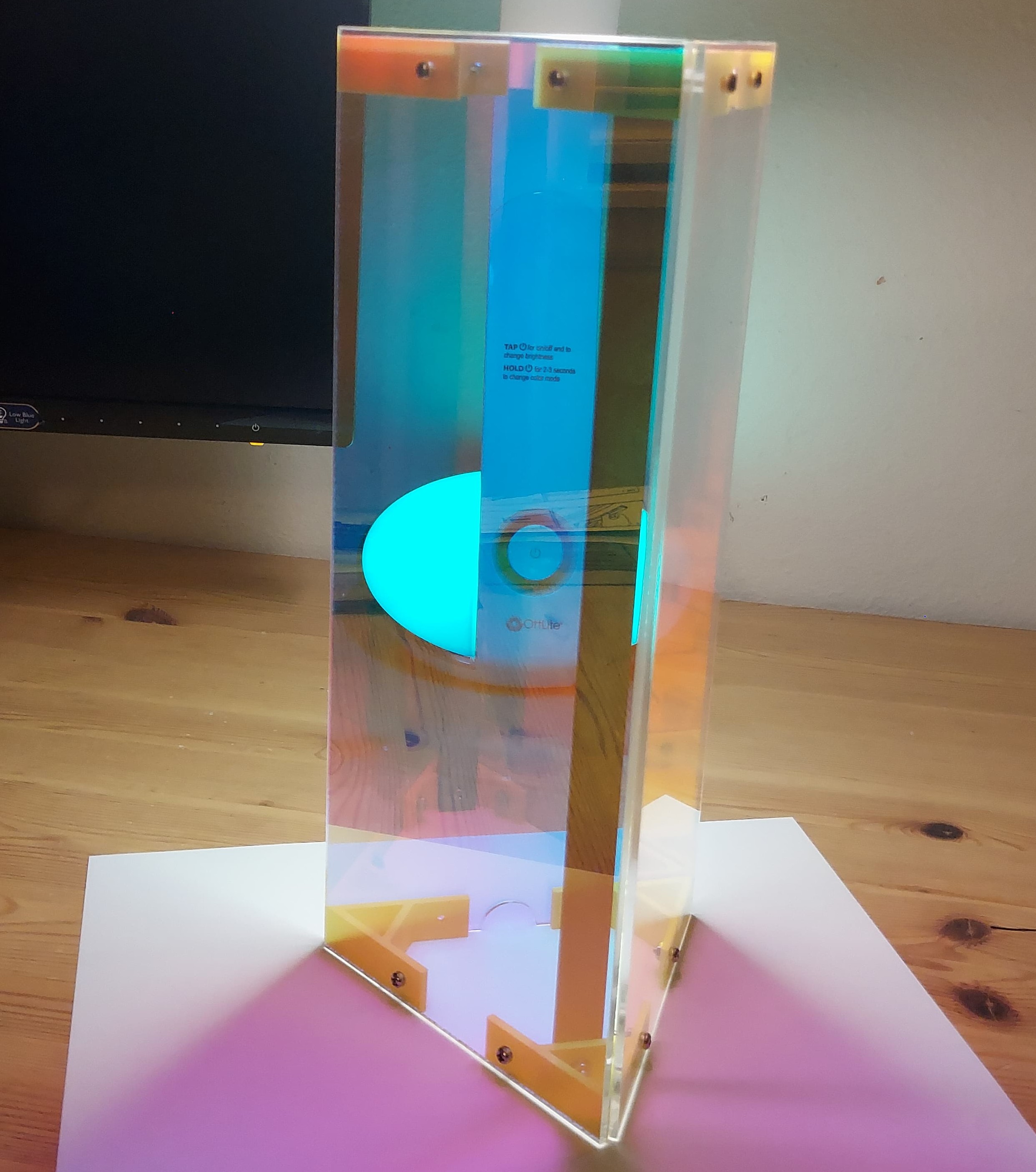
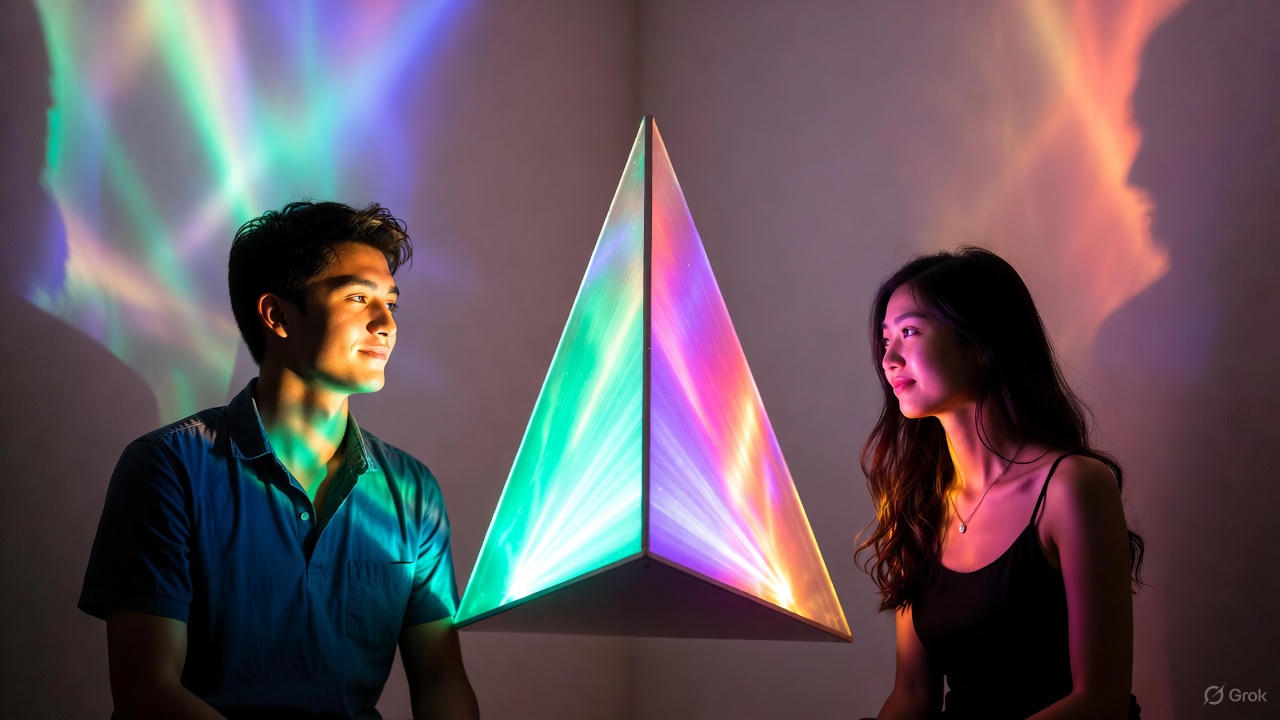
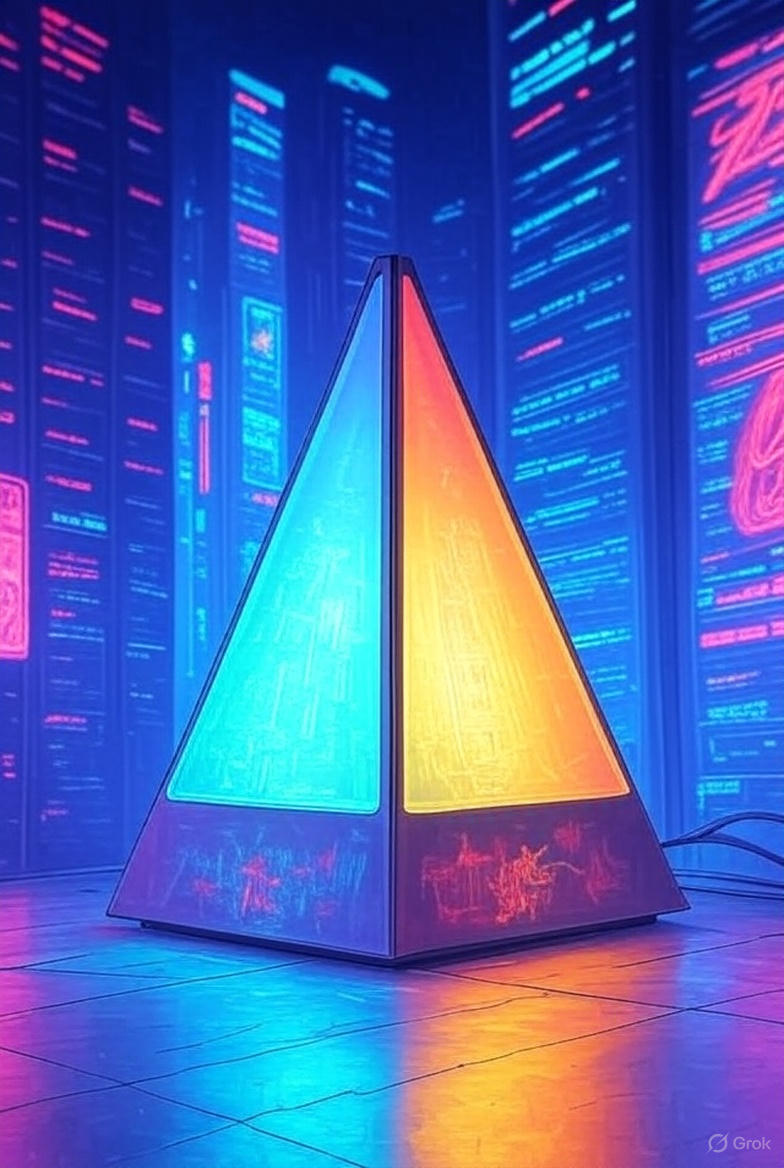
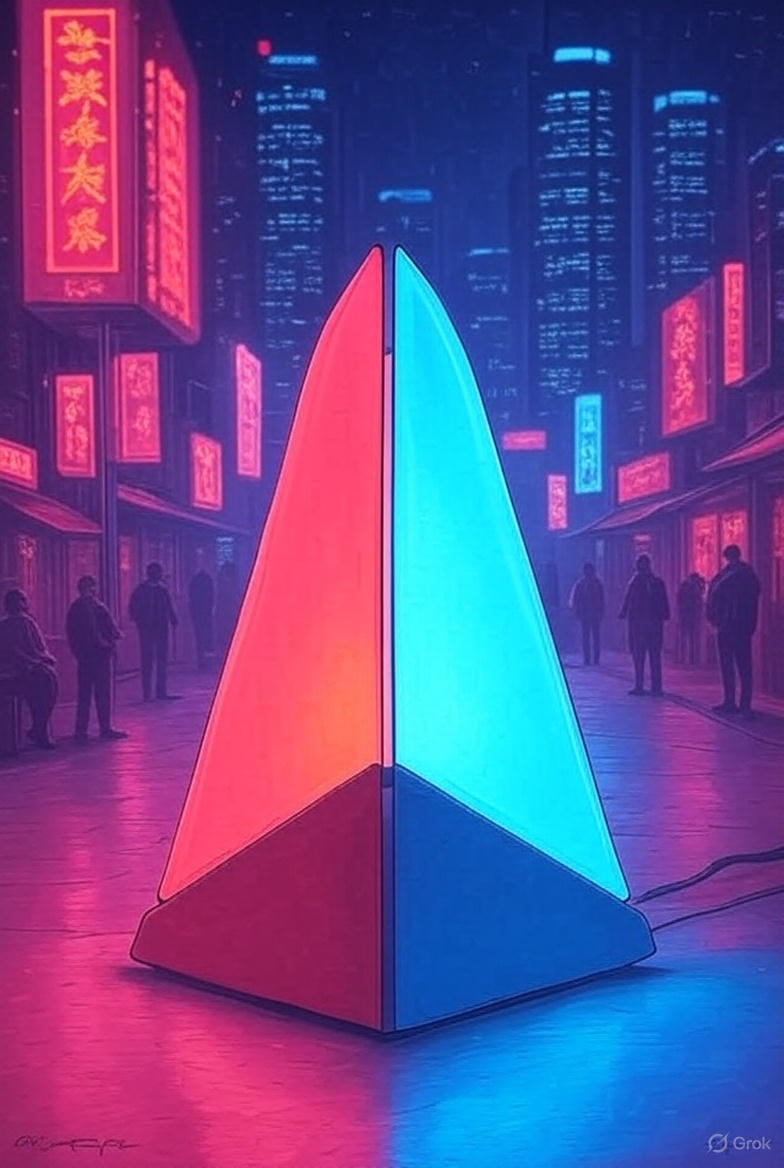
Context: This project explores how physical structure, material properties, and controlled lighting can create a dynamic, angle-dependent color experience. The design began with the idea of a monolithic triangular lamp made of three 30 cm × 13 cm tinted acrylic panels. The goal was to build an elegant display piece where the color shifts from blue → purple → pink depending on the viewer’s angle.
The lamp solves the problem of uniform, predictable lighting by intentionally creating a different visual experience for every viewer. Using only material optics and LED placement, the piece functions as both a lamp and interactive art object.
PROCESS
Objective
Create a stable triangular light column using three acrylic panels
Produce natural color-diffusion without software or moving parts
Achieve strong angle-dependent color variation (blue–purple–pink)
METHODOLOGY
SKETCH -> FIRST PROTOTYPE -> FINAL MODEL
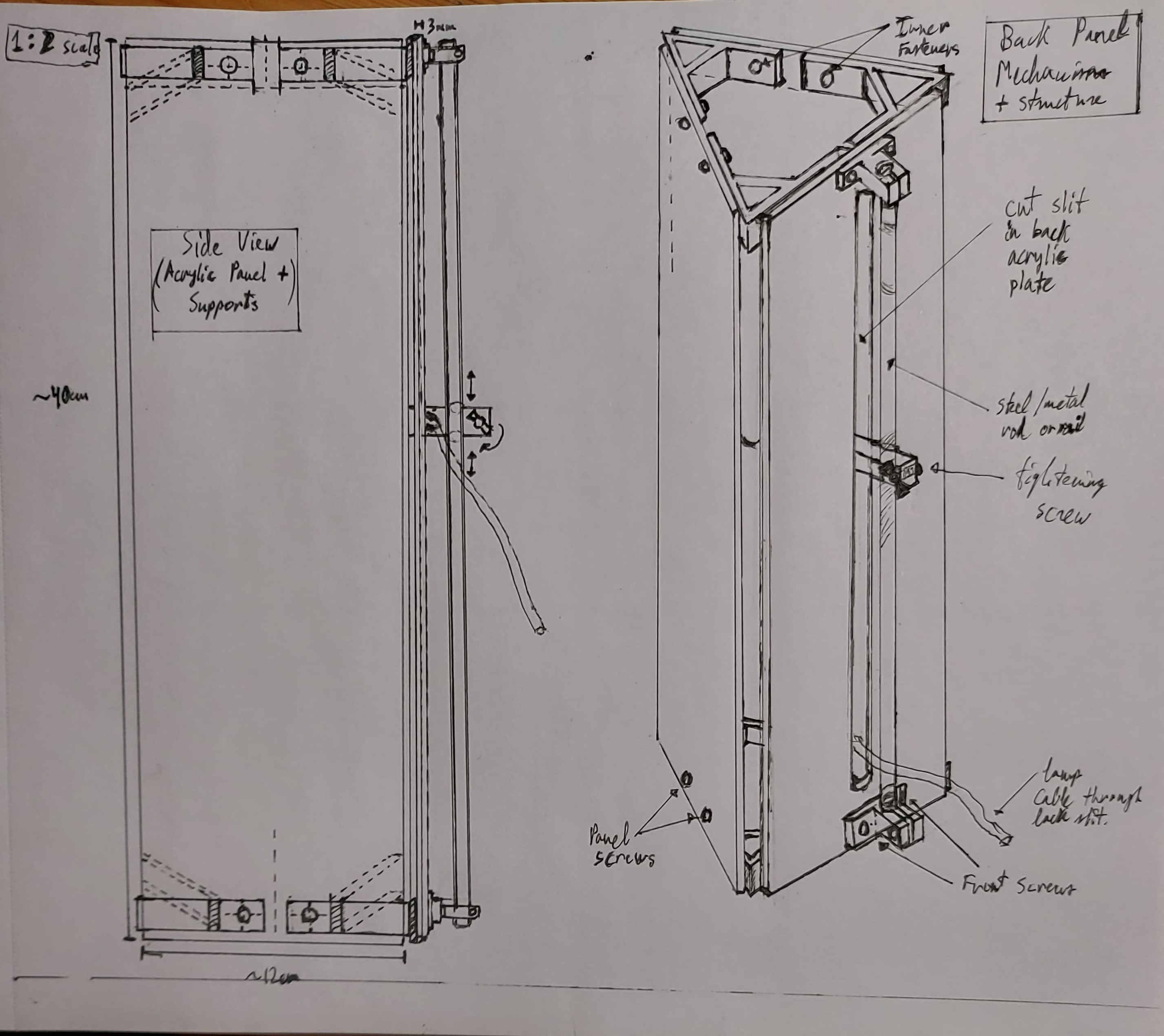
Sketch
Planned triangular geometry & support structure
Determined LED routing and panel proportions
Estimated material behavior under white and RGB lighting
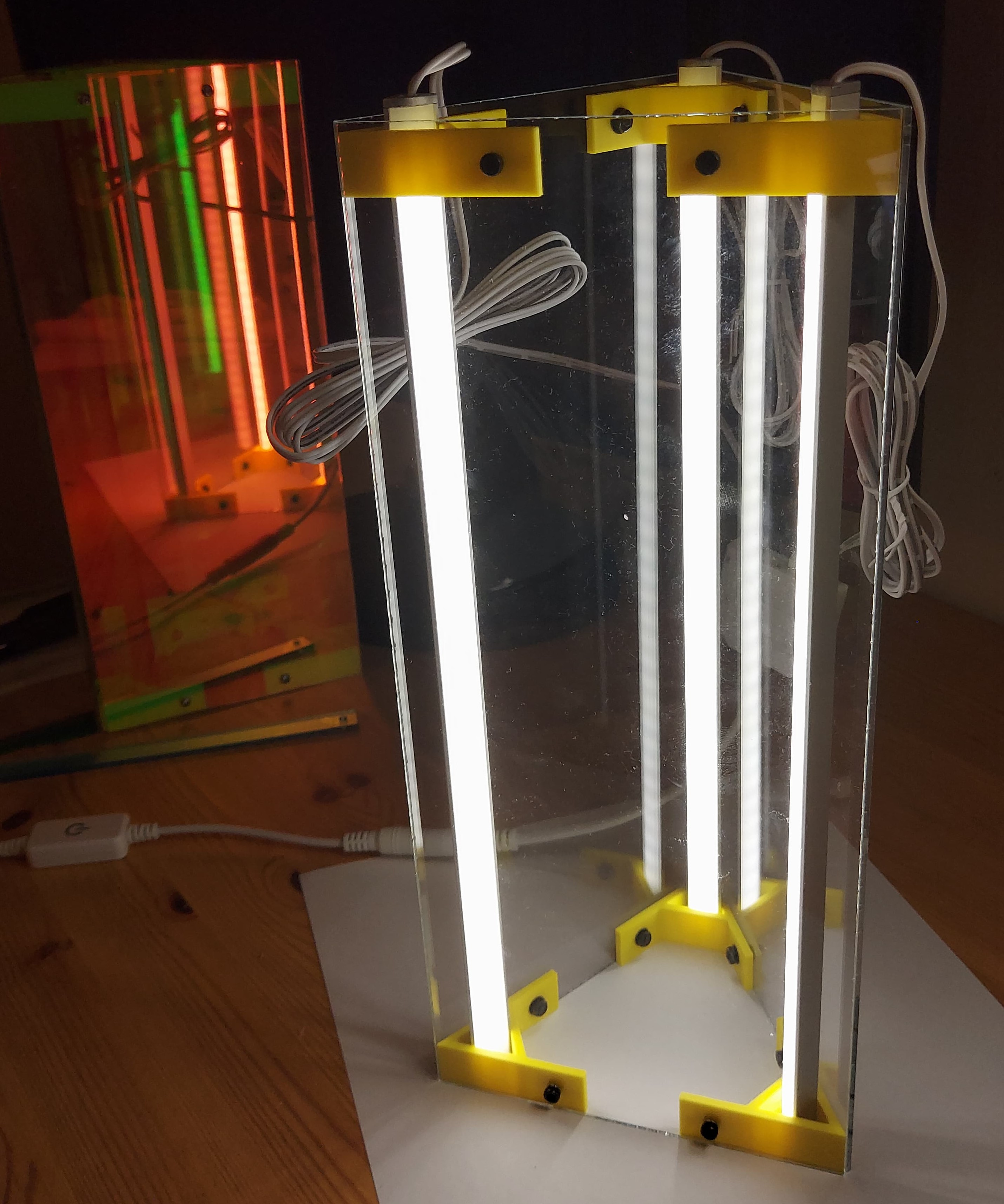
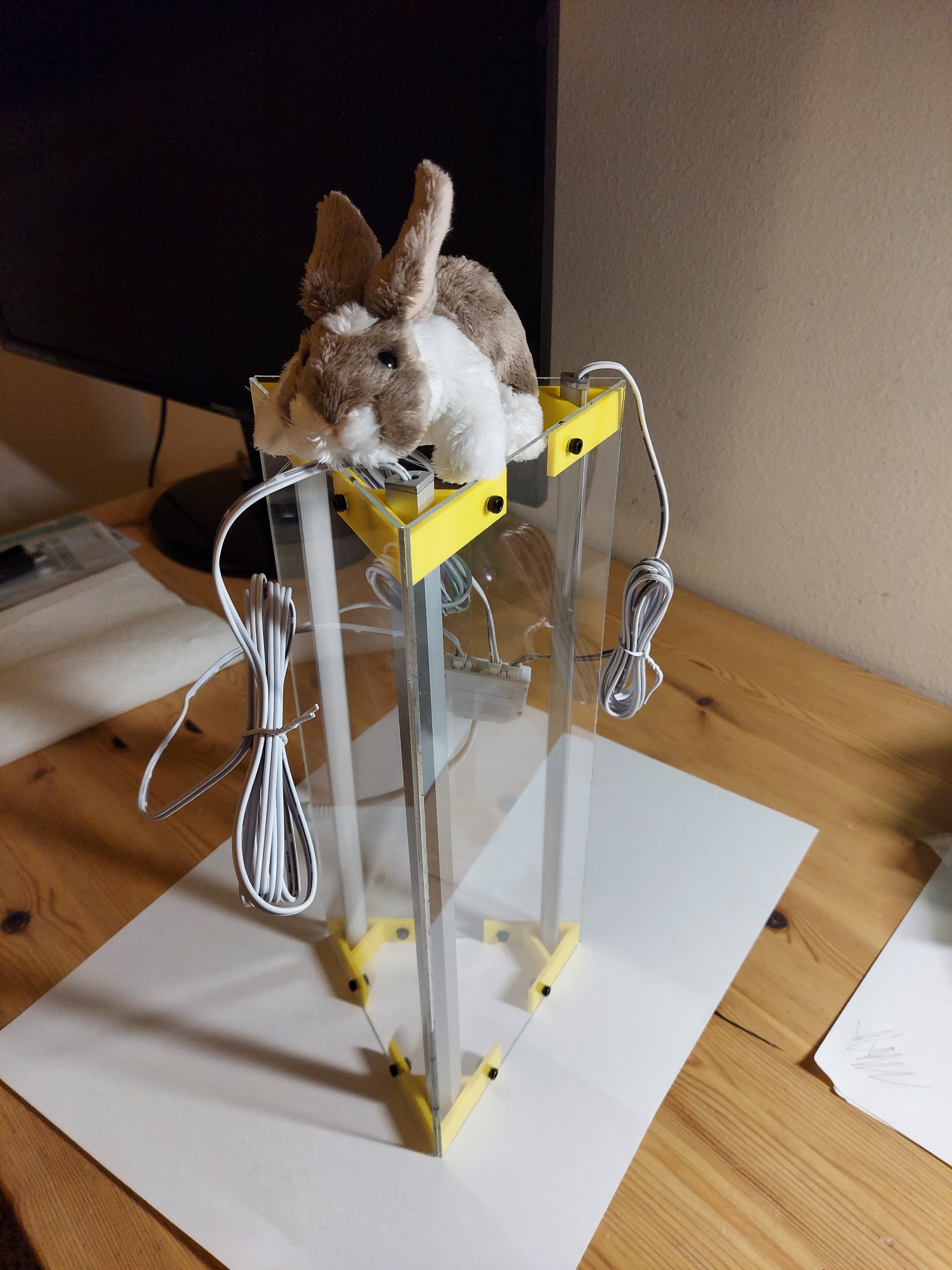
First Prototype — Clear Acrylic
Used clear acrylic with no corner columns
Tested lighting using vertical white LED beams
Verified color-shift behavior and structural alignment
Final Model — Purple/Blue Diffusive Acrylic
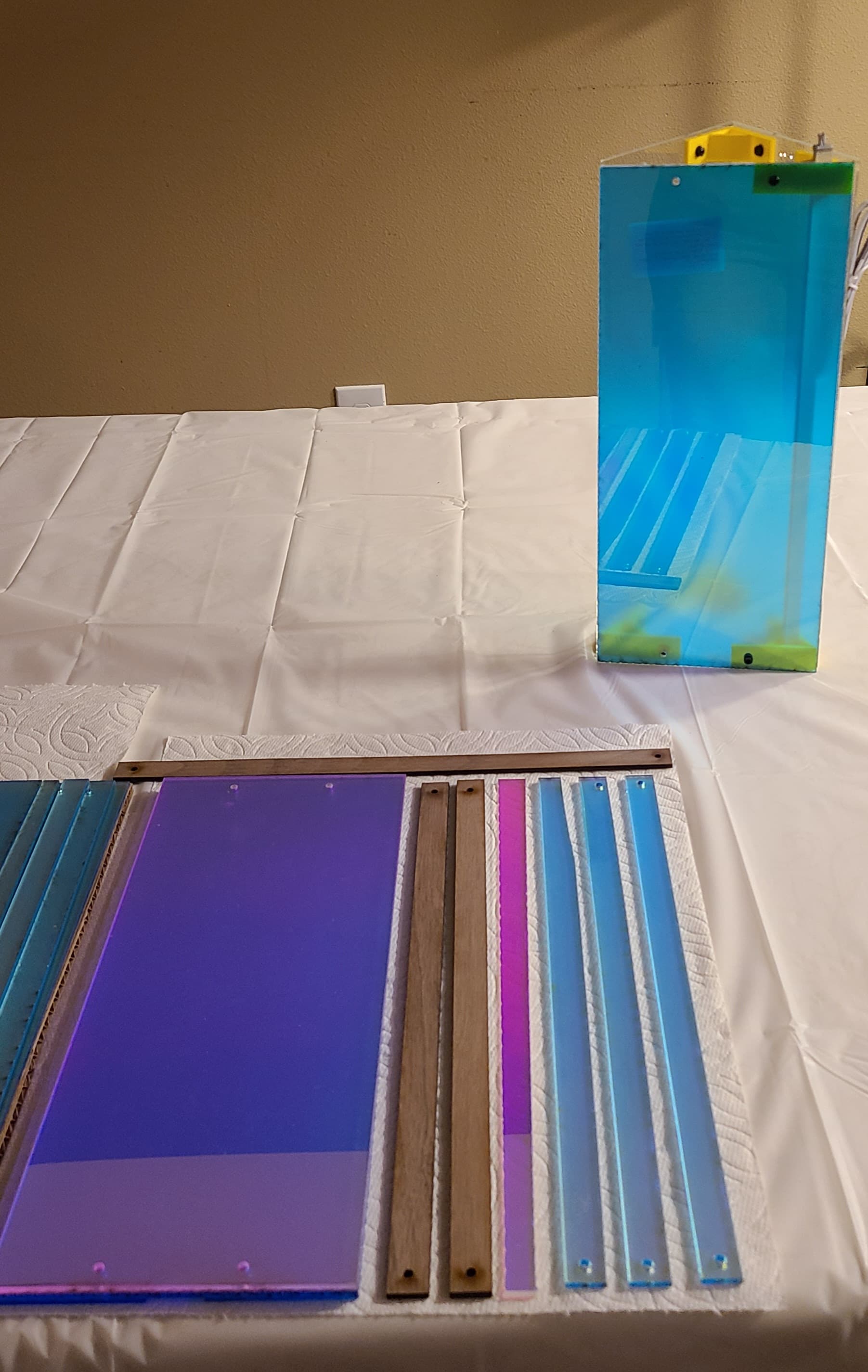
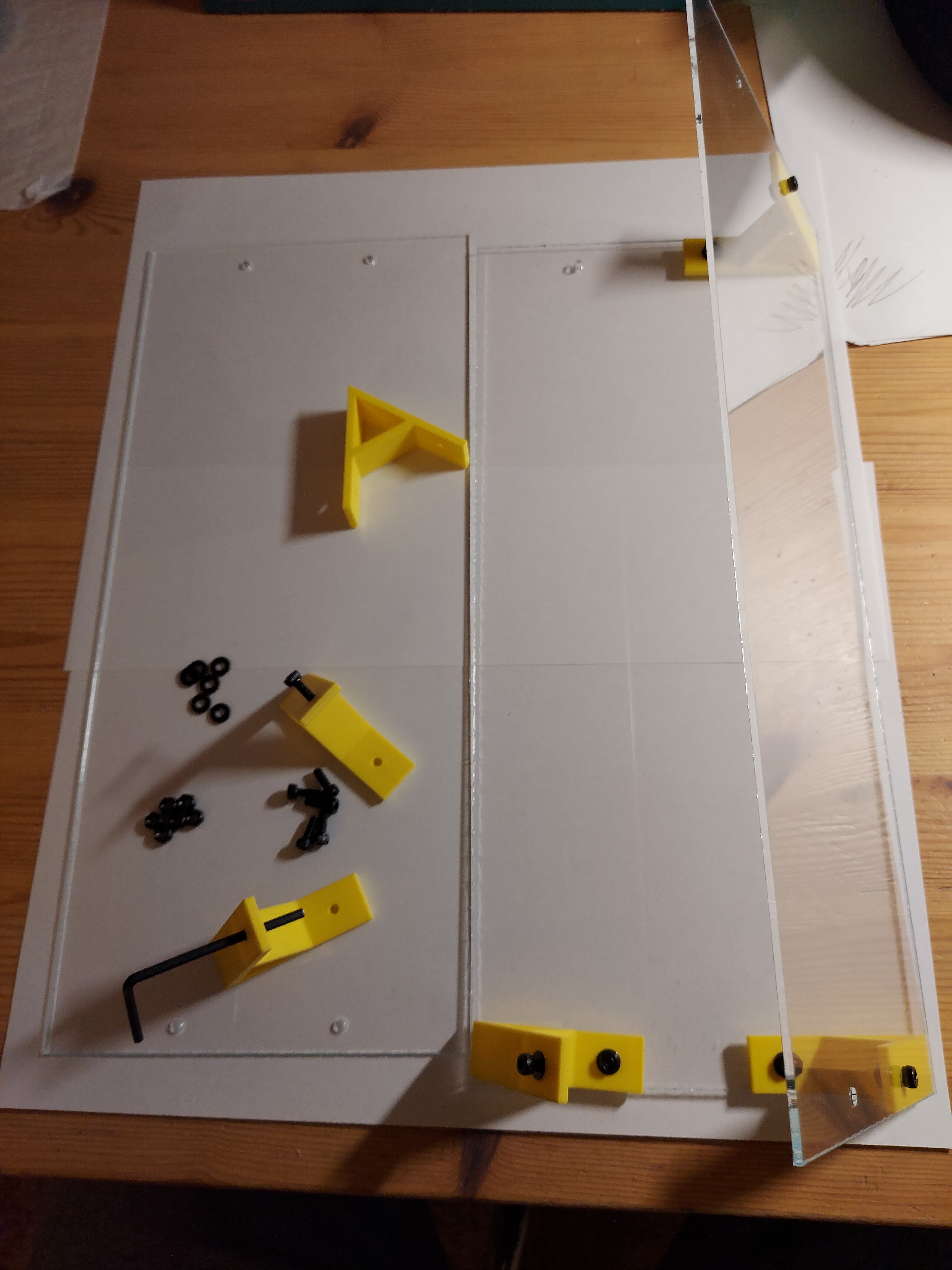
Laser-cut 30×30 cm accent acrylic into 30×13 cm panels
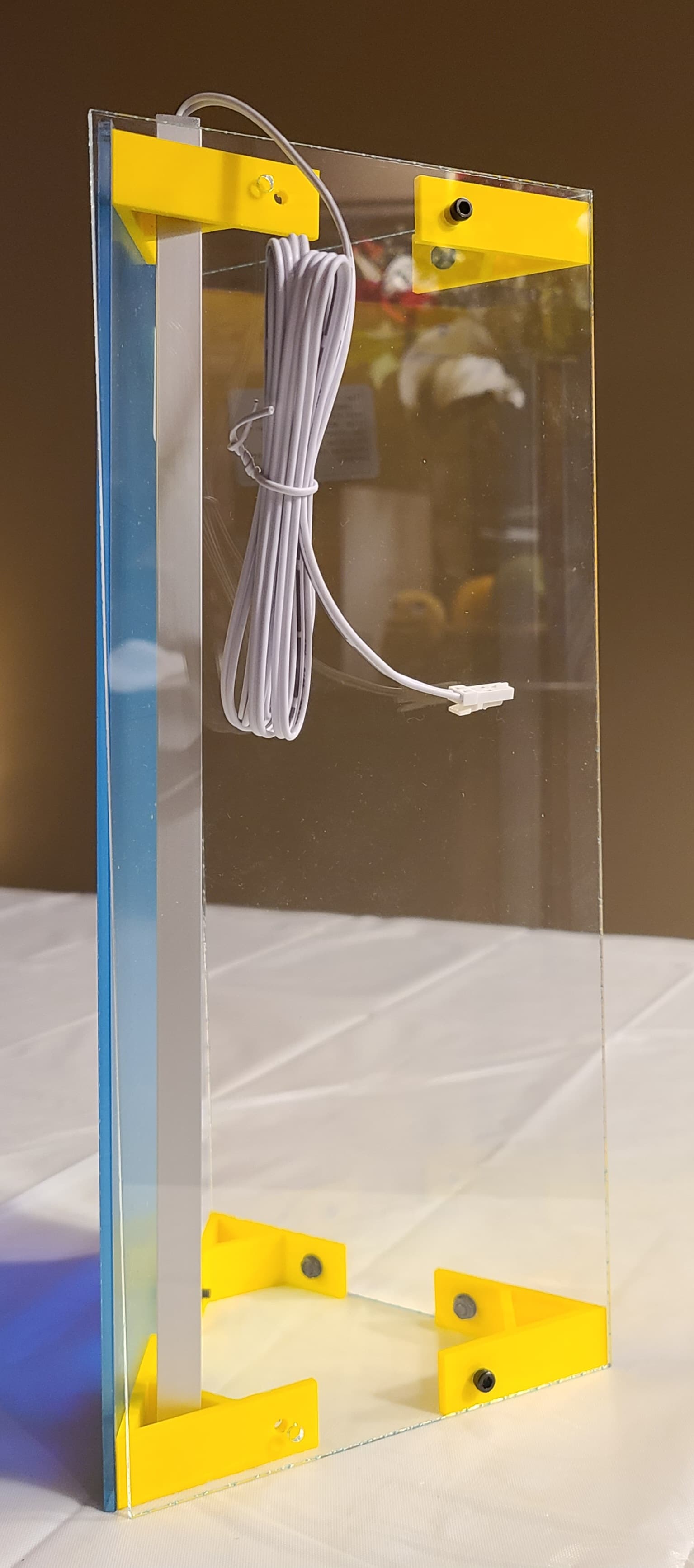
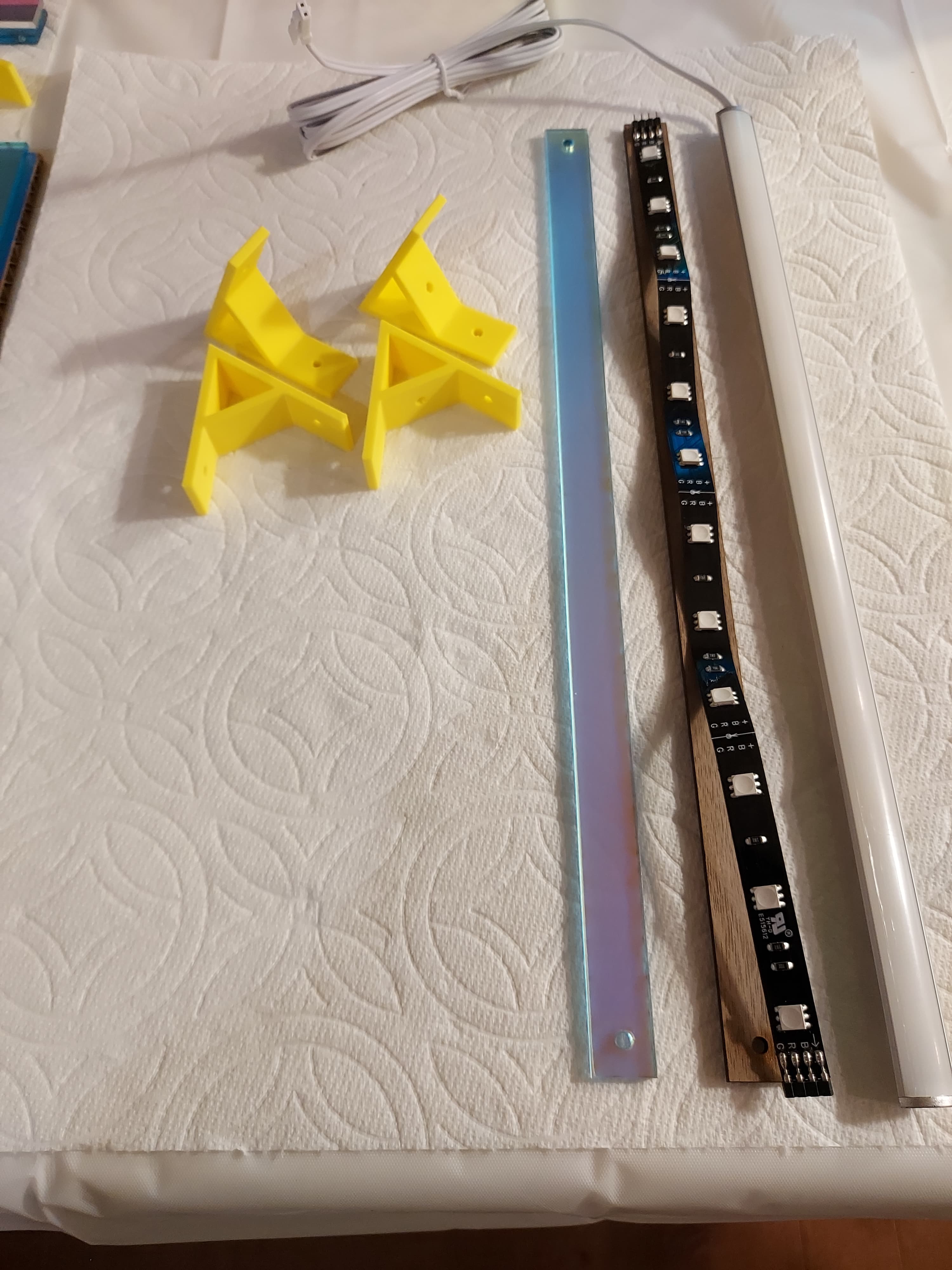
Added A-shaped 3D-printed top and bottom supports and plywood 30 cm × 1.5 cm corner bars for rigidity
Installed RGB LEDs on corner columns for full diffusive effect and integrated a 2 cm rear cable-routing cutout
RESULTS
Strong angle-dependent color shifts: blue → purple → pink
Clean optical diffusion due to tinted acrylic material
RGB LEDs create customizable vertical gradients
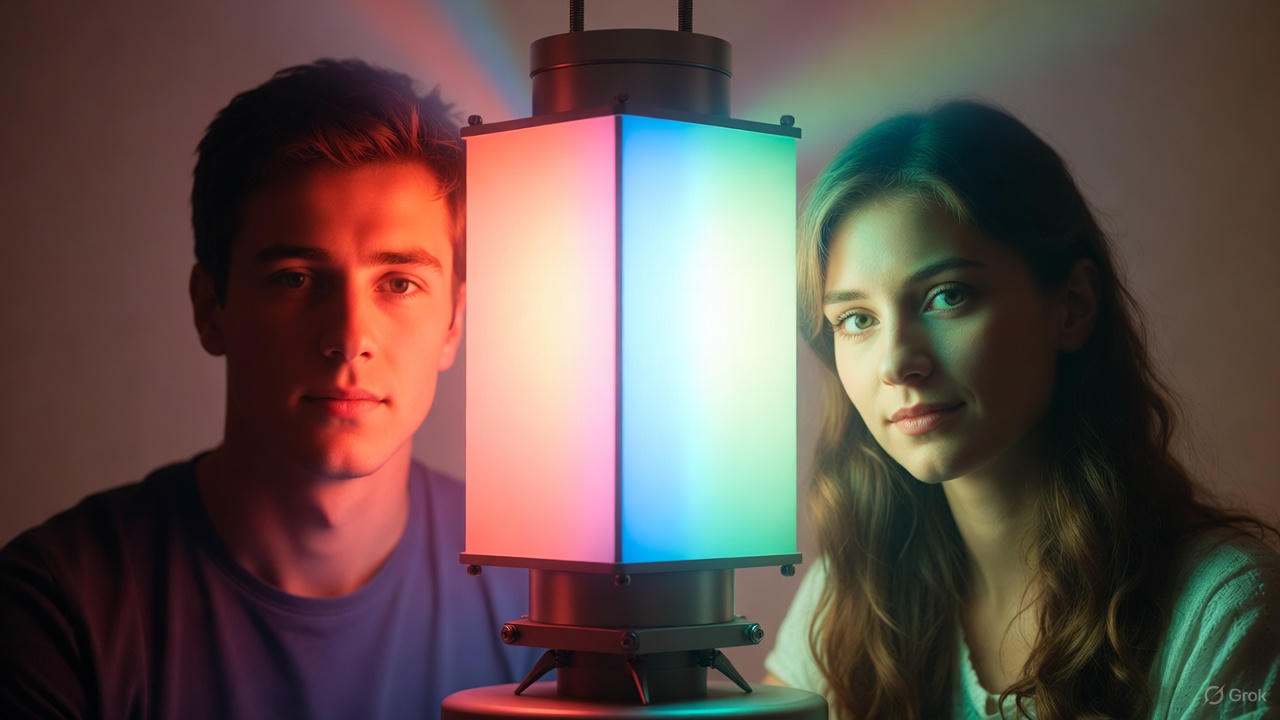
A rotating base demonstrates smooth color change without cord twist
ANALYSIS
Challenges & How They Were Solved
Laser Cutting Accuracy
Issue: Screwed holes needed perfect symmetry across all panels
Solution: Cut a cardboard template and placed each acrylic panel in identical position during laser cutting
Acrylic Edge Quality
Issue: Edges slightly singed/warped, affecting color
Solution: Adjusted power/speed and allowed cooldown between passes
3D Print Tolerances
Issue: Excess material inside screw holes
Solution: Cleared with a turnkey to create consistent threading
LED Connector Clearance and Cable Routing
Issue: Connectors crowded top corner area, closed sides with no top opening
Solution: Rerouted connectors and used a single zip-tie twist for strain relief, Added 2 cm half-hole in the back panel